Thursday, 28 August 2008

Hookers in the mud

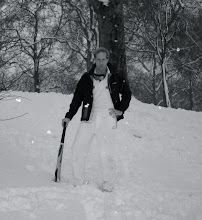
Yesterday was my debut appearance for Drovers CC (http://www.droverscc.com/), in a Twenty20 match against the Happy Hookers CC in Kingston.

Things got off to a poor start as I realised I'd left my spikes at home; a school boy error in the circumstances, those being torrential rain and an uncovered pitch. The rest of the Drovers coped fairly well, however, and, in this Somme-like reenactment, G-man delivered the early wickets and the team spirit was high. But mistakes, including a woeful dropped catch by yours truly at deep midwicket off the none too pleased Cuzza (unmoved by my claim to have lost it in the air), took their toll and the Hookers finished with a decent 226.

Batting at three, surely there was time for a between-innings shandy, I mused, as I wandered back to the pavilion (/ tree, park bench), but before I'd finished tightening the laces on my slicks, Ed had fallen for a golden duck and I was back out in the middle. With Hillsy out almost next ball to an outrageous inswinger, we were looking shaky and I needed to take charge. After a comfortable three off two balls, this seemed possible and Charlie B and I felt confident we could man the trenches for some time. But a quick single called by my brave comrade was our downfall; something I realised when we passed each other barely three feet outside my crease, as I ran on the spot in cartoon fashion. The ensuing direct hit was unfortunate, and even our team mate Cuzza at square leg umpire couldn't swing that one for me. It was '3 run out' on the score card. Not quite the ship-steadying performance I had in mind.

Brave batting by our lower order almost clawed the game back, but our comically bad start to the innings had cost us the match and we fell to the Hookers with two overs to spare. The last game of the season for the Drovers, but not for the Everest Test. Tenzing and Hillary will be battling it out in a warm-up match on September 27th at Sheen Park.

Haydn

Friday, 8 August 2008

Blood Against the Snows


Book Review, August 2008

Blood Against the Snows: The Tragic Story of Nepal’s Royal Dynasty

By Jonathan Gregson

Fourth Estate (2002)

ISBN 1841157848


The mystique of the crown and the loyalty it commanded among ordinary Nepalese had firstly to do with the association of the Shah dynasty and the nation state itself. Prithvi Narayan Shah, the Gorkha raja and first Shah king (Mahārājdhirāja), who had formed the state of Nepal by his conquests of the Malla Kings of the Kathmandu Valley in the late 18th century, had actively worked to promote the concept of nationhood to a territory which, while ruled centrally from his time onward, was and remains a land of unrivalled ethnic, religious and cultural diversity. So it was that the linkage of the Shahs and the state of Nepal became entrenched. Second, and more importantly, the Shahs were no ordinary kings, nor even kings chosen by God (as in Europe and elsewhere), but were considered to be partial reincarnations of Lord Vishnu (the preserver and protector of the universe). The Shahs were truly god-kings to their people, a status that enhanced any claim they might make to absolute rule.

In Blood Against the Snows, Jonathan Gregson, a respected commentator on the Himalayan region and the only foreigner to have interviewed King Bidendra Shah, seeks to tell the story of the Shah dynasty and in particular to explain how a monarchy with such apparently strong foundations managed almost nothing but survival during its tenure.

One key structural weakness in the crown was the strict form of primogeniture established by Narayan Shah. This brought about successive kings too young to govern which, combined with the absolute power of the crown (breeding temptation in others), the lack of established precedent (by virtue of the newness of the institution) and the general instability of the country (one without even stable borders), gave rise to a “a political culture based on fear and self-interest… that was to have grave consequences for future kings of Nepal.” The massacre of 2001, a tragedy without question, was but a reflection of the far more turbulent and bloody years of the 19th century during which factionalism and intrigue led to sporadic but regular assassinations of nobility, court staff and royal relatives, enforced sati (the suicide of a wife, and often her maids, on the funeral pyre of her husband) and the regular exiling and imprisonment of political opponents. Hundreds of lives were lost. Gregson writes that: “Not in the goriest of Jacobean tragedies does one encounter so many futile deaths.”

Ironically, what saved the crown then, as in the early 1990s with the Spring Awakening, was the emergence of powers that forced the Shah kings into conceding political authority. Throughout their 240-year reign and whatever the political compromises of the day, the Shah kings, almost without exception, showed a clear preference for maintaining total political control over Nepal, to the exclusion of all others. And yet, as Gregson points out, the dynasty was always at its strongest the less power it had and the less influence it exercised. In times of apparent weakness, “the absence of responsibility contributed to the popularity of Nepal’s monarchy”, because the king “could not be blamed when things went wrong.” Given the appalling poverty and squalid social conditions of the peasant masses, contrasted with the corruption and wealth of the ruling elites, distance from the people and their problems was a matter of necessity.

True to its early history, the Shah dynasty was ultimately dealt its strongest blow from within, with the massacre by Crown Prince Dipendra – then first in line to the throne – of ten members of the royal family, including King Bidendra Shah. “Imagine”, Gregson writes, “it happening in Britain: Prince Charles would have had to shoot dead Queen Elizabeth and Prince Philip, his brothers Edward and Andrew, Princess Anne, his own sons William and Harry and, to end it all, himself, leaving only (at that time) his aunt, Princess Margaret, to assume the throne.” These events, which took place on a single night in the grounds of the royal palace in April 2001, were caused primarily by the deep frustrations of the Crown Prince at the unwillingness of King Bidendra Shah and, to a larger extent Queen Aishwarya, to permit him to marry his love, Devyani Rana. Dipendra was a young man of Western education and broad cultural experience who was trapped in the bizarre “Alice in Wonderland” world of the palace and the antiquarian rules of the court. His actions were likely fuelled in part by alcohol and drug consumption, but the reason for the extent of the killing spree is unclear and Nepal remains rife with conspiracy theories as to the killer’s motives and identity. Whatever the truth, this was, as Gregson notes, “the bloodiest, the most complete massacre of any royal family ever recorded” and an unimaginable loss to the Nepalese people.

As of 2001, fifty years after it had opened up to the outside world, Nepal was in crisis. To ordinary Nepalese, “the royal family’s self-destruction was a symptom of a broader malaise affecting the entire nation”; a theme pushed successfully by the Maoist insurgents, whose agenda of social and economic development was finding resonance in rural areas. In a modern era of instant communication, press coverage, diplomacy and popular politics, maintaining a king above the law and in control of the army was becoming increasingly difficult. So too the magic of the crown was slipping and the king’s status as a deity in the eyes of the public could no longer be taken for granted, not least for a man such as Gyanendra, who took the throne through the junior (cadet) line of succession. The monarchy was fighting for survival. And yet, as with almost all Shah kings before him, Gyanendra’s instinct was to consolidate power in the crown. He simply could not cast off the “culture of absolutism that had supported the family for so long”. The historic lessons of disentanglement from politics – of freedom from responsibility and blame – were ignored. Under pressure from his own and foreign governments (the U.S. had, after 9/11, branded the Maoist rebels a “terrorist group”), Gyanendra went into bat for the establishment against the Maoists, ordering the Royal Nepal Army to move against them.

Of Gyanendra’s decision to side with the government, Gregson argues that this strategy would be an all or nothing one: “If the Maoist insurgency is quashed and there are signs of real progress in Nepal, its monarchy will endure. If not, King Gyanendra’s willingness to take up the challenge means that Nepal will not be a Kingdom for much longer.” Written in 2002, this was prescient commentary. Gyanendra went even further than expected and assumed all powers of government and after years of sporadic but intense fighting a ceasefire ensued in which Gyanendra surrendered power to a reinstated parliament in which the Maoists would later form the largest group. True to its manifesto, a bill for the abolition of the monarchy was duly passed and on May 28, 2008 the 240-year old Shah dynasty came to an end. Nepal was now a secular federal republic and Gyanendra was given 15 days to leave the palace. He did so on June 11, 2008.

Nepal’s political situation remains precarious during this interim two-year period while the constitution is rewritten, but the country is largely peaceful for the time being at least. Time will tell if it can heal and the world watches in hope that the government can deliver on the promise of social and economic development that has been made and broken so many times in the past. In the meantime, the work of charitable organizations such as the Himalayan Trust UK remains as crucial as ever.

Rating: 2 out of 5

Sunday, 20 July 2008

Touching My Father's Soul


Book Review, July 2008

Touching My Father’s Soul: In the Footsteps of Sherpa Tenzing

By Jamling Tenzing Norgay

Random House (2001)

ISBN 00712605819


Ostensibly a record of Jamling Norgay’s successful Everest expedition with the IMAX team in 1996, Touching My Father’s Soul is much more than this. It is a deeply thoughtful autobiographical account of the journey of personal development of a young Sherpa man struggling to find his identity in the complexity of the modern world and the long shadows of his father’s greatness.

Norgay, the fourth of six children, was born in Darjeeling and educated there at an elite private school, Saint Paul’s, before studying at Northland College in Wisconsin. At age 17, he had ambitious plans to become the youngest ever man to climb Everest with an Indian expedition team, but his father, a distant and often absent figure in his life, refused him. Norgay's appetite to emulate Tenzing continued unabated however, and in 1995 he agreed to join David Breashears and his team in their extraordinary bid to record an Everest expedition through an IMAX camera lens, for production of the film Everest.

The story of the expedition is cleverly interwoven with anecdotes and narrative of the 1953 climb, offering readers a useful insight into the ways in which climbing has changed over the years. The contrast is a stark one, from the technological advances in equipment (the front-end crampons, the lightweight refillable oxygen bottles, aluminium ladders, navigational equipment, etc.), to the number of camps placed (nine then, compared to four now), to the sheer uncertainty of route and terrain faced by his father and Sir Edmund Hillary. If proof were needed that modernity has not tamed the mountain, however, it came with the storm of May 10, 1996, which famously trapped and killed eight members of the preceding expedition teams. The events of the tragedy are vividly recalled by Norgay, who witnessed them by telescope and radio from Base Camp. While avoiding casting blame, Norgay notes that the storm itself was only a part of the reason for the disaster, compounding mistakes already made by the expedition teams, resulting in part from the pressure on commercial expeditions and individual egos and emotions. Throughout the book, he stresses the importance of approaching Everest with humility, respect and patience. “My father knew before he ever set foot on the mountain that it had to be approached with respect and with love, the way a child climbs into the lap of its mother. Anyone who attacks the peak with aggression, like a soldier doing battle, will lose.”

The historical perspective of the book also provides a contrast of the Nepal of 1953 and today, in particular the effect of modernisation on the Sherpa culture and people. Norgay, somewhat generously perhaps, does not lay blame for the erosion of Sherpa traditions with foreign visitors per se, but rather on the failure of the Nepalese government to use the moneys generated by climbing royalty fees to invest in social projects in the Sherpa communities, and on the emergence of new cultural reference points in the form of Asian satellite television, the Hindi cinema and the distractions of Kathmandu. Indeed, Norgay argues that foreign visitors (“Mikaru” or “white eyes”, to the Sherpas) and the influx of capital over the past fifty years have in some ways helped preserve Sherpa heritage, for example in areas such as Khumbu, where monasteries have flourished as a result of Sherpa families being able to afford to send one of their sons (usually, the third) to become a monk. He credits too the work of the Himalayan Trust in the building of the Khumjung School and argues that the key to the protection of the Sherpa way of life is to provide the Sherpa communities with the quality schools needed to avoid the rush to Kathmandu and abroad for education and opportunity.

Perhaps most interestingly, the book describes the highly ritualistic and spiritual manner of the Sherpas, reflected both in their everyday lives and in their approach to Everest (or “Chomolongma”, to the Sherpas): from the lighting of butter lamps at the Great Stupa of Boudhanath, the spinning of prayer wheels at the Dwoche monastery, the prayers, meditation and chanting of the puja ceremonies at Base Camp, to the stringing of prayer flags at the summit and the special cremation ceremonies for the dead at Chukpö Laré. Norgay admits his initial mixture of curiosity and scepticism towards these rituals, and of his uncertain faith in the Buddhist deities, in particular Miyolangsangma, the goddess of Everest and one of the Five Long-Life Sisters who reside in the Himalaya. In the book, Norgay recalls, however, that as the expedition progressed and as the team in particular confronted the horrors of the May 10 tragedy, his faith strengthened enormously. “[O]nce I arrived in the lap of the mountain, surrounded by Sherpas who believed, and confronted by a rich history of death – and death itself – I could no longer remain cynical.”

The book records how, with each step up the mountain, Norgay found that the Buddhist teachings he had learnt as a child, in particular their simplicity and focus on the essential elements of life, seemed to make sense. “One reason why people go into the mountains is to experience the purity of these elements – these goddesses – in their unobstructed form. In the mountains, worldly attachments are left behind and in the absence of material distractions, we are opened up to spiritual thought.” The expedition opened Norgay to a spirituality he had lost in his Western education and childhood. He recalled with some pride how his mother, when she travelled to the U.S. with Tenzing, would sit outside the hotels they stayed at and sell her Himalayan trinkets to passers by, and clearly felt the need not just to connect with his family roots but to embrace his faith and find the peace of mind that she had attained through her Buddhism and the compassionate works she did in their community.

The expedition also allowed Norgay to understand what had led Tenzing to Everest, and to gain a sense of connection he never had while his father was alive. In the book, he describes the feeling of “walking on Tenzing’s back”, seeing what his father saw and understanding what he must have experienced back in 1953. Norgay felt the force and spirit of his father guiding him up the mountain and recalls seeing a vision of him at the summit and speaking to him for the last time. It was only then that he was able to emerge from Tenzing’s shadows. “Stepping on the summit of Everest freed me from the confinement of my ambitions. And it freed me from following my father, from searching for him.” Finding his father and finding his faith “launched me”, Norgay writes, “onto my own path.”

As great an achievement as it was to reach the summit in 1996 with the IMAX team and record the astonishing footage captured at the roof of the world, the book explains that, for Norgay, the expedition was ultimately a means to an end. What was to most climbers a physical challenge, a rock to be conquered, had become for him a “pilgrimage to Miyolangsangma”; a journey of enlightenment that led to a sense of freedom and self-identification for the first time in his life.

Today, Norgay works with the American Himalayan Foundation, a nonprofit organisation based in San Francisco and Kathmandu, dedicated to improving conditions in Sherpa communities through grass roots social projects. In the last chapter of his book, Norgay laments thus: “Thousands of people visit the Himalaya each year, and hundreds promise to help the local people. But only a few of them actually return to do something.” This is no doubt true, and a sad reflection of the fleeting charitable interests of modern tourists and travellers. Fortunately, this cannot be said of the Everest Test 2009. Whatever else happens on the trip, members of the Everest Test expedition can take pride in the knowledge that they will be doing something to help, whether or not they return.

Rating: 4 out of 5

Thursday, 3 July 2008

Welcome

This blog a personal diary of my journey to Everest. Hopefully, I will find the time to include on here some anecdotes of our fundraising antics and other amusing stories of our preparation, but there will be many more entertaining blogs from other members of the expedition squad, details of which I'll post in due course. The main purpose of my blog will be to explore the academic and philosophical side of the expedition through reviews of important books on Nepal, Everest and Sherpa culture.

For those wanting to learn more about the expedition, how to donate to the good causes or get involved, please visit: http://www.theeveresttest.com/.

Thanks,
Haydn